

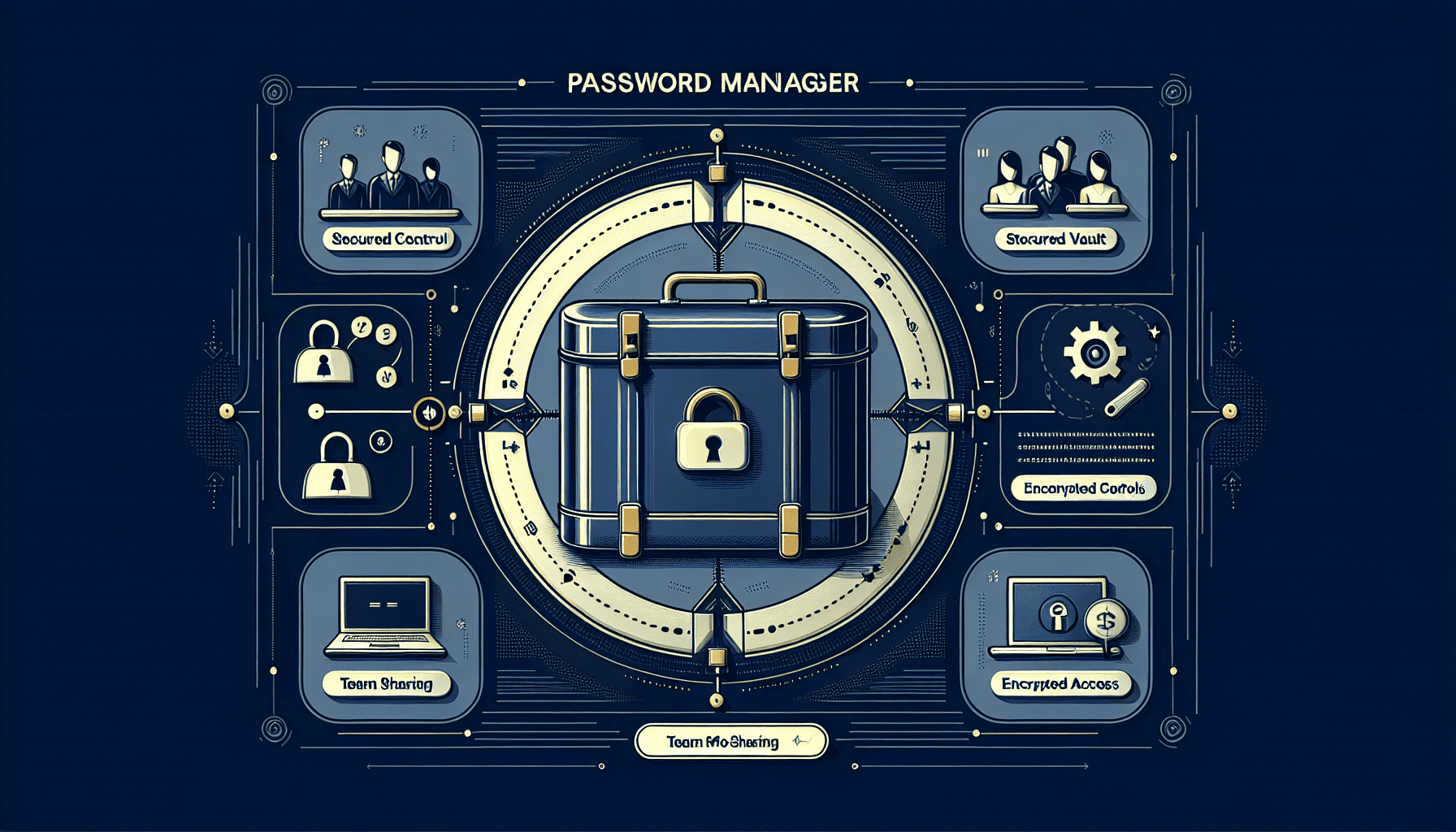
The average employee now juggles more than 100 passwords across work applications, cloud services, and internal systems. Faced with that impossible burden, most people do what humans have always done — they take shortcuts. They reuse the same password everywhere, add a “!” to meet complexity requirements, or keep a spreadsheet of credentials on their desktop. Research consistently shows that roughly 65% of people reuse passwords across multiple accounts. For businesses, that statistic is not just an inconvenience — it is an open door for attackers. A password manager closes that door by generating, storing, and autofilling strong, unique credentials for every account, all protected inside an encrypted vault.
Why Password Reuse Is a Business Risk, Not Just a Bad Habit
When an employee reuses their personal email password for your company’s CRM, accounting platform, or Microsoft 365 tenant, they have created a direct link between a consumer data breach and your business network. Credential stuffing attacks exploit exactly this scenario: attackers take breached username-password pairs and automatically test them against thousands of business services. If one match succeeds, they are inside your environment with legitimate credentials — no malware required, no alarms triggered.
The problem scales with your headcount. A 50-person company with no password manager likely has hundreds of reused or weak credentials spread across dozens of services. Each one is a potential entry point that your firewall and antivirus will never see.
What a Password Manager Actually Does
At its core, a password manager performs four functions:
- Generate strong, random passwords — 20+ characters of mixed letters, numbers, and symbols — for every account. No human needs to invent or remember them.
- Store those credentials in a vault encrypted with AES-256 or XChaCha20, protected by a single master password (or passkey) that only the user knows.
- Autofill login forms in the browser or on mobile devices, so employees never need to copy-paste or type credentials manually. This also provides passive phishing protection — the autofill will not populate credentials on a spoofed domain.
- Sync across devices so credentials are available on the employee’s laptop, phone, and tablet without ever being transmitted in plaintext.
The result is that employees interact with one strong master password and the password manager handles everything else. Friction goes down, security goes up.
Business Features That Matter
Consumer password managers are a good start, but business editions add capabilities that organizations need to manage credentials at scale:
- Team sharing and secure vaults. Share credentials for shared accounts — social media logins, vendor portals, service accounts — through encrypted vaults with granular permissions. No more passwords in Slack messages or shared spreadsheets.
- Role-based access controls. Limit who can view, edit, or share specific credentials based on their role. When an employee leaves, revoke their access instantly without changing every shared password.
- Audit logs. See who accessed which credential and when. This is essential for compliance frameworks and incident investigation.
- SSO and directory integration. Connect the password manager to your identity provider (Azure AD, Okta, Google Workspace) for centralized provisioning and deprovisioning. When you disable an account in your directory, the password manager access is revoked automatically.
- Security reporting. Dashboards that surface weak passwords, reused credentials, and accounts without MFA across your entire organization.
These features transform a password manager from a personal productivity tool into an enterprise security control — and they are exactly what Digital Checkmark evaluates when helping clients select the right platform. Our security awareness training program includes hands-on password manager onboarding so adoption actually sticks.
Choosing the Right Password Manager
Three platforms consistently stand out for small and mid-sized businesses:
- Bitwarden — Open-source, independently audited, and the most cost-effective option. Ideal for organizations that value transparency and want to self-host or use the cloud offering. The business tier includes directory integration, vault health reports, and event logs.
- 1Password — Known for an excellent user experience and polished browser extensions. Its Watchtower feature proactively flags compromised or weak credentials. Strong integration with macOS and iOS environments.
- Keeper — Built with compliance in mind, offering HIPAA and SOC 2 support out of the box. Features like BreachWatch (dark web monitoring) and Keeper Connection Manager add layers beyond basic credential storage.
The best choice depends on your budget, compliance requirements, existing tech stack, and user experience preferences. There is no universal winner — only the right fit for your organization.
Password Manager Deployment Best Practices
Technology adoption fails when rollout is treated as an IT project instead of a change-management initiative. Here is the approach we recommend and execute for our clients:
- Secure executive buy-in first. When leadership visibly uses the password manager and champions it in company communications, adoption rates increase dramatically. If the CEO still keeps passwords in a notebook, no one else will change either.
- Run a pilot program. Start with a small, tech-forward team — often IT or finance — to work out deployment issues, build internal champions, and create documentation before the company-wide rollout.
- Enforce master password requirements. The master password is the single key to the vault. Require a minimum of 16 characters (a passphrase works best) and mandate MFA on every vault. A weak master password undermines the entire system.
- Provide hands-on training. A 30-minute live session covering browser extension installation, saving new credentials, generating passwords, and sharing securely is far more effective than a PDF guide no one reads.
- Migrate credentials methodically. Help employees import existing credentials from browsers, spreadsheets, and other managers into the new vault. Then disable browser password saving to prevent drift back to old habits.
The ROI of a Password Manager
The productivity case alone is compelling. Studies estimate that employees spend an average of 12 minutes per day on password-related tasks — logging in, resetting forgotten passwords, hunting for credentials, and dealing with lockouts. For a 50-person company, that is 50 hours per week, or roughly 2,600 hours per year of lost productivity. Even a conservative valuation makes the cost of a password manager — typically $5–$8 per user per month — trivial by comparison.
Then there is the security ROI. The average cost of a credential-related breach runs into the millions when you factor in forensics, legal exposure, regulatory fines, and customer loss. A password manager eliminates the most common root cause — reused and weak passwords — at a cost of a few hundred dollars per month for most small businesses.
And do not overlook the helpdesk savings. Password resets are consistently among the top IT support tickets. A password manager with self-service vault access and browser autofill reduces those tickets dramatically, freeing your IT team — or your MSP — to focus on higher-value work.
What Happens Without One
Without a password manager, your business is gambling. Employees will reuse passwords. Credentials will end up in email threads, shared documents, and sticky notes. When a breach occurs — and with credential stuffing attacks running continuously, it is a matter of when — you will have no audit trail, no way to quickly identify which accounts are compromised, and no mechanism to rotate credentials at scale.
Digital Checkmark helps Tampa businesses evaluate, deploy, and manage enterprise password managers as part of a comprehensive security program. We handle the tool selection, directory integration, employee training, and ongoing administration so you get the security benefits without the implementation headaches.
Ready to eliminate password chaos from your business? Contact Digital Checkmark for a free consultation and let us help you choose and deploy the right password manager for your team.